
Table of Contents
1. The Local Database as the Source of Truth
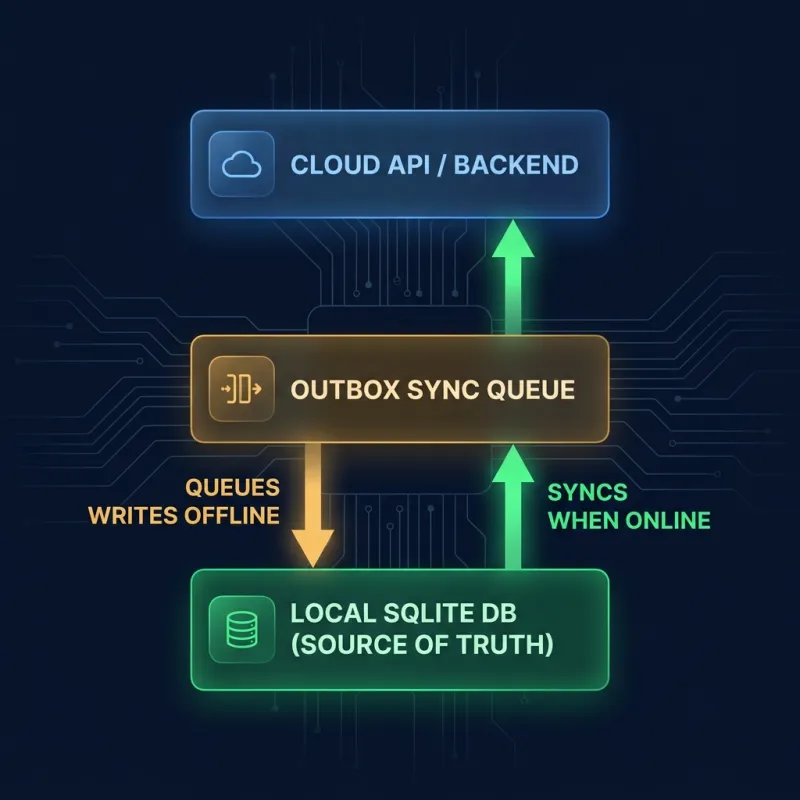
In a robust offline-first system, the local data layer (typically SQLite) is primary storage. By reading and writing directly to the local database, the app remains fully functional and responsive even in areas with poor or no network connectivity.
2. The Outbox Pattern for Syncing
Instead of making immediate API calls, data mutations are recorded in a local "sync queue" or "outbox" table within SQLite. This guarantees data durability. Even if the app crashes during an outage, the pending changes are safely stored and ready to be synchronized later.

3. Conflict Resolution Strategies
When multiple users edit the same data offline, conflicts are inevitable. Strategies range from simple "Last Write Wins" to complex CRDTs (Conflict-free Replicated Data Types) for real-time collaboration. The right choice depends entirely on your specific business logic and tolerance for data loss.
4. Recommended Patterns for 2026
Ensure your UI layer is reactive, observing the local database directly rather than waiting for network responses. Furthermore, design all API operations to be idempotent by using unique client-side UUIDs to prevent duplicate records during network retries.
For expert implementation, consider our mobile app development team.


