
Table of Contents
1. Consent as Infrastructure
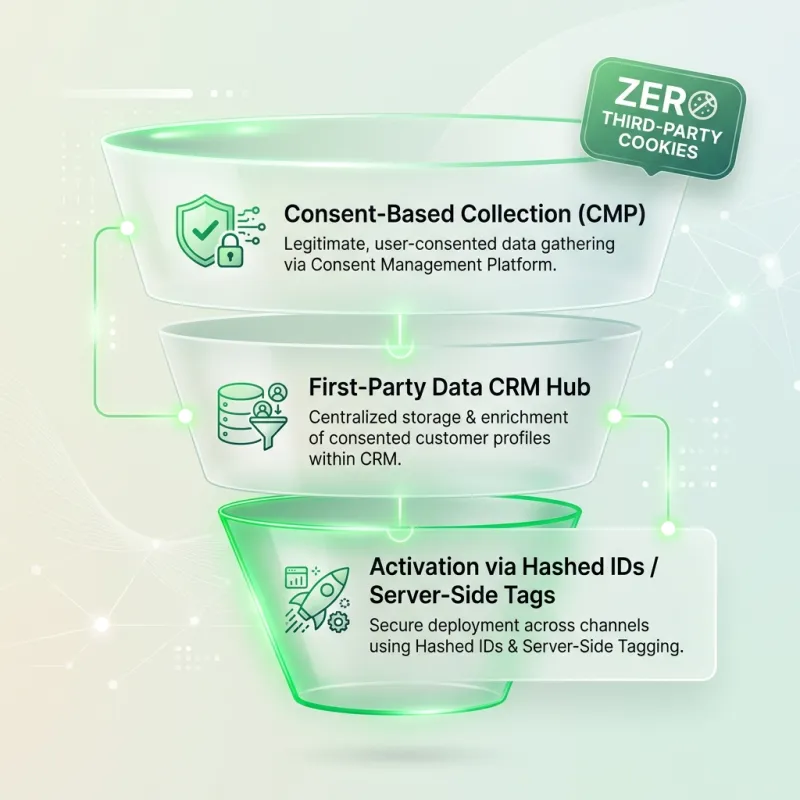
Cookie banners are no longer just legal checkboxes; they are critical marketing infrastructure. Implementing a robust Consent Management Platform (CMP) integrated with tools like Google Consent Mode v2 is essential for modeling conversion data when users opt out of traditional tracking.
2. The Shift to Server-Side Tracking
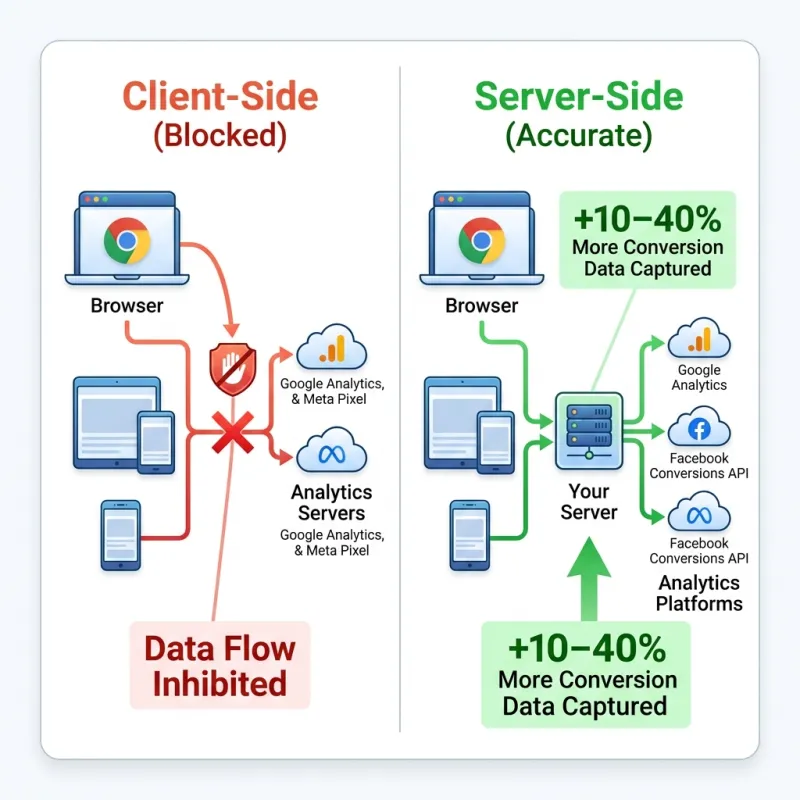
Server-side tracking is now a standard requirement. By routing data through your own server before sending it to platforms like Meta or Google, you maintain full control over what is shared, bypassing ad blockers and often capturing 10–40% more conversion data.
3. Activating First-Party Data
First-party data is the primary asset for personalization. Strategies must focus on moving this data into a unified, secure environment (CRM) and activating it through "hashed" identifiers (e.g., email addresses) for accurate attribution in a cookieless world.

4. Offering a Value Exchange
To collect first-party data effectively, brands must offer a clear value exchange. Exclusive content, personalized experiences, or targeted discounts are required to incentivize users to willingly share their information in a privacy-conscious ecosystem.
Enhance your strategy with our digital marketing services.


