
Table of Contents
1. The Scale of WordPress: Why it Dominates and Why That's a Double-Edged Sword
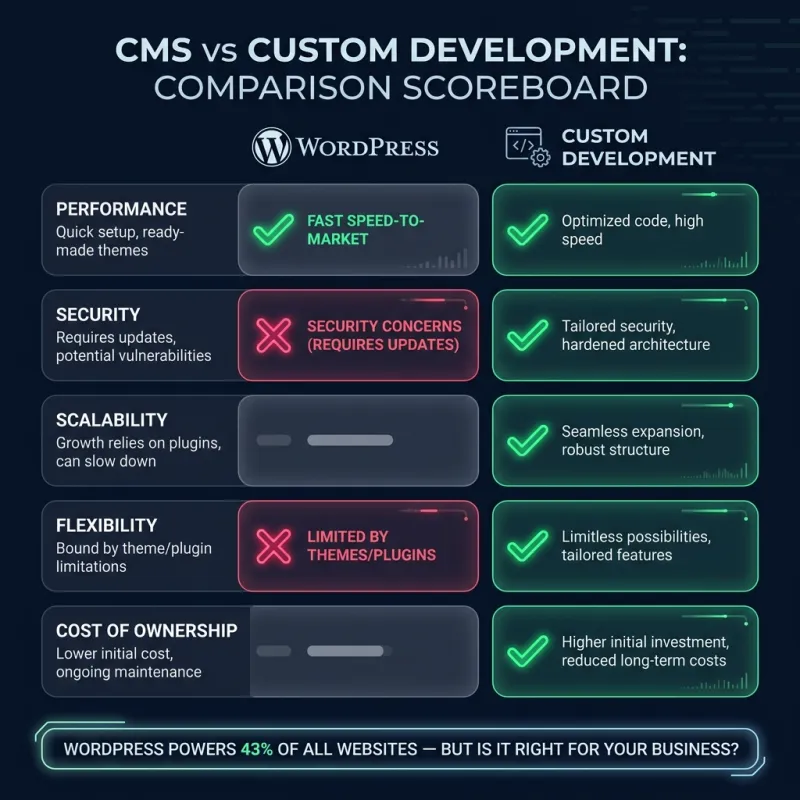
WordPress powers approximately 43% of all websites globally — making it the most successful content management system ever built. This ubiquity creates a virtuous cycle: massive plugin ecosystem, abundant developer talent, and extensive documentation. For content publishers, bloggers, and straightforward business sites, WordPress is genuinely excellent.
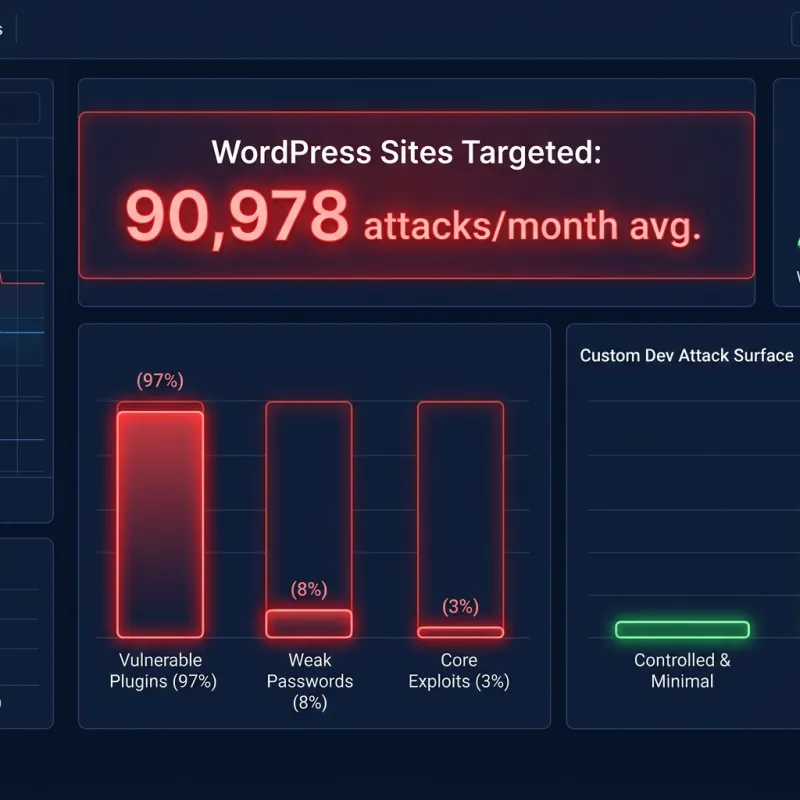
However, that same ubiquity makes WordPress the single most-targeted platform on the internet. An average WordPress site faces 90,978 automated attacks per month. The platform's architecture, designed in 2003 for blogging, was not built for the security requirements of modern B2B lead generation or e-commerce.
2. The Hidden Cost of Plugin Dependency
WordPress's power comes from its plugin ecosystem, but that ecosystem is also its greatest liability. The average business WordPress site runs 20–30 plugins. Each plugin is an independent codebase with its own update cycle, compatibility conflicts, and security surface. When two plugins conflict — and they do, regularly — the debugging process typically requires a developer at $100–$200/hour.
Over 3 years, the total cost of premium plugins, security hardening, performance optimisation (to compensate for bloated plugin code), and developer emergency support frequently matches or exceeds the cost of a custom-built solution that does exactly what you need and nothing more.
3. Where Custom Development Wins: Performance and Scalability
Custom-built web applications are lean by design. Every feature is intentional. There is no query overhead from unused plugin tables, no render-blocking stylesheets from twelve different plugin authors, and no JavaScript conflicts. This directly translates to superior Core Web Vitals scores and higher conversion rates.
Custom sites that are architected for conversion — with strategic CTA placement, performance-first loading, and bespoke UX flows — achieve conversion rates consistently above 3%, compared to the sub-1% averages seen on generic WordPress templates. When your website is your primary sales asset, that difference is compounding revenue.
4. The Decision Framework
Choose WordPress when: you need a content-heavy site live within weeks, your technical team is non-existent, your budget is under $5,000, or your primary use case is blogging and content marketing. Choose custom development when: you have bespoke functional requirements, you handle sensitive customer data, performance and conversion rate are primary KPIs, or your website is a direct revenue channel.
Our custom development team offers a free architecture consultation to help you determine the right path. For a deeper understanding of how page performance affects your bottom line, read our guide on website redesign and CRO.
Transform your business today.
Reach out to our experts and discover how custom software can accelerate your growth.


