
Table of Contents
1. Why Most Website Redesigns Fail (and Cost You Money)
The most common and most expensive mistake in web strategy is redesigning a website based on aesthetic preference rather than conversion data. A new design that looks beautiful but loads 2 seconds slower than the previous version will reduce your revenue. The data is unambiguous: every 1-second delay in page load time reduces conversion rates by 7–20%.
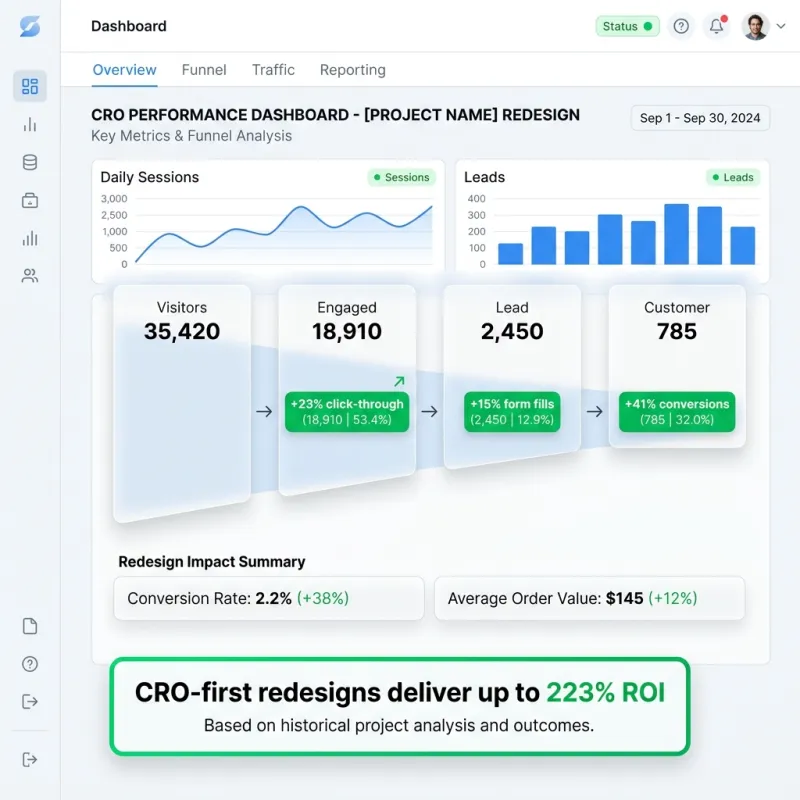
One-third of marketers report being dissatisfied with the results of a traditional website overhaul, specifically because the project was scoped aesthetically ("we want a modern look") rather than commercially ("we want to increase qualified leads by 40%"). CRO-first redesigns start with the commercial goal and work backward to the design.
2. The Performance-Conversion Relationship
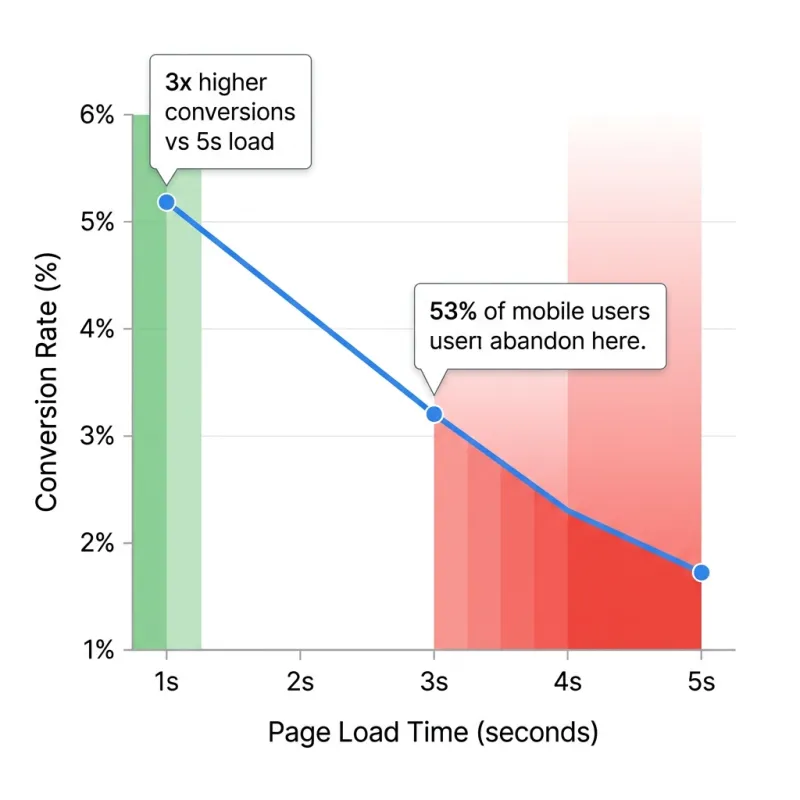
Page speed is not a technical metric — it is a revenue metric. Improving your page load time by just 0.1 seconds increases conversions by 8.4% for retail sites and 10.1% for travel sites. A website that loads in 1 second converts at rates 3x higher than a website that loads in 5 seconds. If 53% of mobile users abandon a page that takes over 3 seconds to load, your design quality is irrelevant to more than half your mobile visitors.
This is why Core Web Vitals optimisation must be treated as a design constraint, not an afterthought. Every component, image, font, and third-party script added to a page has a performance cost that must be justified by a measurable conversion benefit.
3. The CRO-First Redesign Process
A CRO-first redesign begins with a quantitative audit: Google Search Console for organic performance, heatmaps and session recordings for UX friction identification, and A/B test history for any previously validated learnings. This data shapes the design brief, not the other way around.
The result is a redesign where every layout decision is a documented hypothesis: "Moving the primary CTA above the fold on mobile is hypothesised to increase lead form submissions by 15% based on heatmap data showing 73% of mobile users never scroll below the first viewport." This hypothesis-driven approach is what enables CRO strategies to consistently deliver up to 223% ROI.
4. Incremental vs. "Big Bang" Launches
The safest redesign strategy is an incremental one. Rather than launching an entirely new site simultaneously (which creates a single high-risk moment where something can go wrong and tank both rankings and conversions), redesign high-priority pages in staged batches. Measure the conversion impact of each batch before proceeding to the next.
This approach protects your existing SEO equity, allows you to validate improvements in real traffic conditions, and creates a continuous feedback loop that compounds your conversion rate improvements over time. Ready to start with a data-driven assessment? Our website development team offers a free CRO audit. For related technical insights, see our guide on technical SEO audits.
Is your architecture scaling?
Get a comprehensive Technical Architecture Audit to uncover hidden bottlenecks before they crash your system.


