
Table of Contents
1. The Financial Impact of Performance
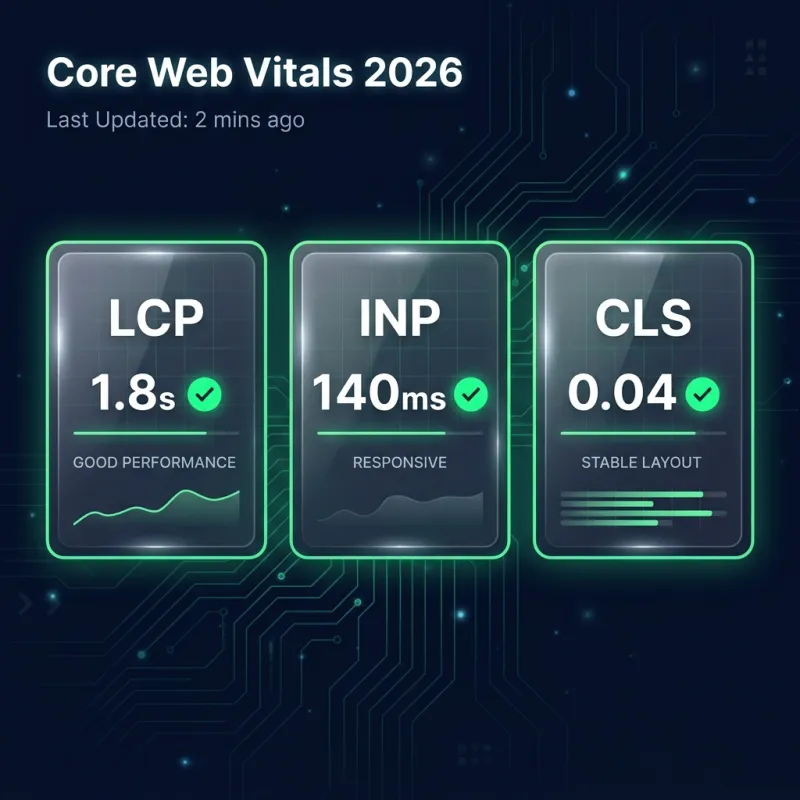
Core Web Vitals are no longer just an IT concern; they are a direct revenue lever. Google's algorithm strictly enforces a 75th-percentile field data rule (CrUX) to evaluate LCP (Loading), INP (Interactivity), and CLS (Visual Stability).
2. LCP: Loading the Hero in Under 2.5 Seconds
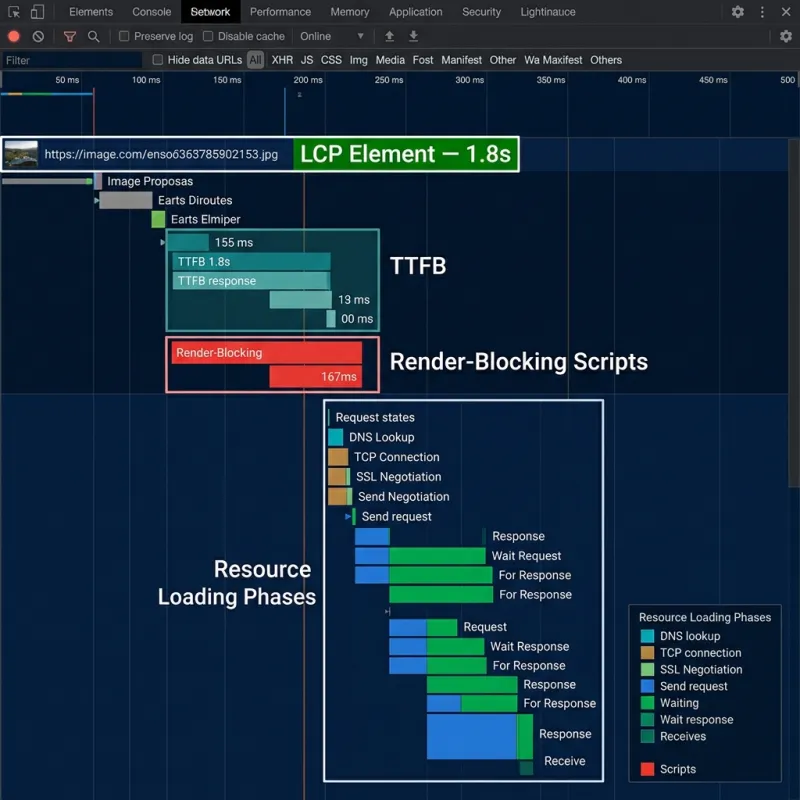
To hit the <2.5s LCP threshold, developers must focus on the critical rendering path. Utilize fetchpriority="high" on hero images, mandate WebP or AVIF formats, and leverage CDNs to minimize Time to First Byte (TTFB).
3. INP: The Metric Most Sites Fail
Interaction to Next Paint (INP) replaced FID because it measures latency throughout the entire page lifecycle. The root cause of poor INP is almost always long JavaScript tasks blocking the main thread. Break these up using requestIdleCallback or setTimeout chunking.

4. CLS: Eliminating Layout Jumps
Cumulative Layout Shift is solved by ensuring all media elements have explicit width and height attributes. Always reserve spatial real estate for dynamic ad slots and use font-display: swap to prevent text rendering jumps.
For more on the financial implications of performance, read about website load speed revenue impact or explore our custom website development approach.


